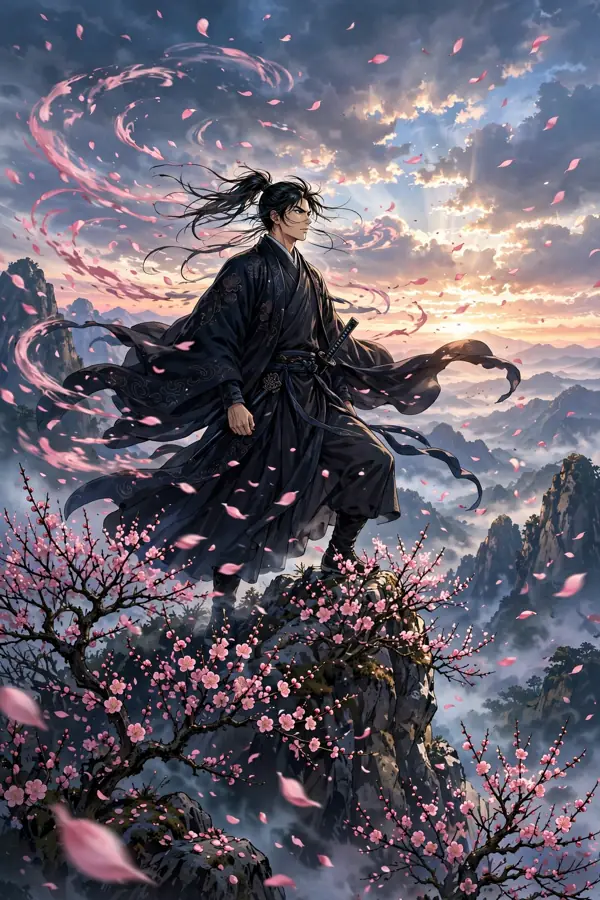
Among the many murim manhwa titles that have surfaced in recent years, few have captured readers’ loyalty quite like Return of the Mount Hua Sect. Known in English on LINE Webtoon as Return of the Blossoming Blade, this martial arts series blends intense action, sharp comedy, and a heartfelt story about rebuilding something that was lost. It follows a legendary swordsman who dies in battle, wakes up a century later in the body of a child, and discovers that the sect he gave everything for has fallen into decline.
If you enjoy stories about martial artists, sect politics, and underdog comebacks, this guide covers everything worth knowing: the premise, the main characters, the world of murim, and why the series has become one of the most talked-about action manhwa of its generation.
The Story Premise
The story opens at the end of a devastating war. Cheongmyeong, one of the greatest swordsmen of the Mount Hua Sect, faces the leader of the Demonic Cult — a fearsome figure known as Cheonma — in a final battle that nearly wipes out the Ten Great Sects of the martial world. Cheongmyeong strikes down Cheonma, but the victory costs him everything, and he dies from his wounds on the battlefield.
A hundred years pass. Then, impossibly, Cheongmyeong wakes up — not as the celebrated sword master he once was, but as a young street beggar in a world that has moved on without him. His first shock is discovering that the proud Mount Hua Sect, once one of the great powers of the martial world, has crumbled into a shadow of its former self. It is poor, it is weak, and its disciples have forgotten the spirit that once made it great.
What follows is Cheongmyeong’s mission to drag the Mount Hua Sect back to glory. Armed with the memories and unmatched martial knowledge of a legendary swordsman, he begins training a new generation of disciples — whether they like it or not. His methods are unconventional, his personality is abrasive, and his temper is short, but his goal is genuine: to make the plum blossoms of Mount Hua bloom again.
The Main Characters
The cast of Return of the Mount Hua Sect is one of its strongest assets. The series gives real attention to the disciples, elders, and rivals who surround the protagonist, and many of them grow into genuinely compelling characters.
Cheongmyeong
Cheongmyeong is the heart of the story. In his past life, he was the Plum Blossom Sword Master, one of the finest swordsmen Mount Hua ever produced. Reborn as a child in a diminished era, he hides his true identity while manipulating events to rebuild his sect. He is rude, sarcastic, and shamelessly opportunistic — he will scam, threaten, or con anyone if it benefits Mount Hua. Yet beneath the scheming exterior lies a swordsman who still carries the grief of his fallen comrades and the weight of a promise to restore what they died for. His contrast between comic behavior and tragic backstory is what makes him so memorable.
Hyeonjong
Hyeonjong is the current sect leader of Mount Hua, and he embodies the sect’s decline. He is kind, well-meaning, and deeply aware of how far the sect has fallen, but he lacks the strength and resources to reverse it. His relationship with Cheongmyeong is complicated — he cannot understand where this strange child disciple’s impossible knowledge comes from, but he slowly learns to trust the boy’s vision.
Jo Geol
Jo Geol is one of Cheongmyeong’s senior disciples and represents the new generation of Mount Hua. At first he resents the upstart junior who keeps bossing everyone around, but through grueling training and shared hardship, he develops into one of the sect’s most dependable young swordsmen. His growth mirrors the larger theme of the series: talent means nothing without the will to keep pushing forward.
Cheonma
Cheonma, the late leader of the Demonic Cult, looms over the story even in death. He was the greatest evil of the old era, the man Cheongmyeong sacrificed himself to defeat. His ominous warning — that darkness would rise again — hangs over the entire narrative and drives much of the tension in the later arcs.
The World of Murim
Return of the Mount Hua Sect is set in murim, the fictional martial arts world that serves as the backdrop for countless Korean manhwa and Chinese wuxia stories. Understanding this setting helps you appreciate what the series is doing.
- The Ten Great Sects: The orthodox martial world’s most prestigious factions, including Shaolin, Wudang, and Mount Hua itself. Their alliances and rivalries shape the political landscape.
- The Demonic Cult: The unorthodox force that opposes the orthodox sects, led by figures like Cheonma. Their return is the story’s looming threat.
- Martial Arts Manuals and Techniques: In murim, a sect’s strength depends on its inherited techniques. Mount Hua’s plum blossom sword arts are legendary — but much of that knowledge was lost during the sect’s decline.
- The Jianghu (Rivers and Lakes): The broader martial world of wandering heroes, merchants, and intrigue, where reputation can be worth more than gold.
What makes this series stand out is how it treats murim politics as seriously as the fight scenes. Sect finances, trade deals, and alliances matter just as much as sword techniques, and Cheongmyeong’s schemes to enrich Mount Hua are some of the most entertaining parts of the story.
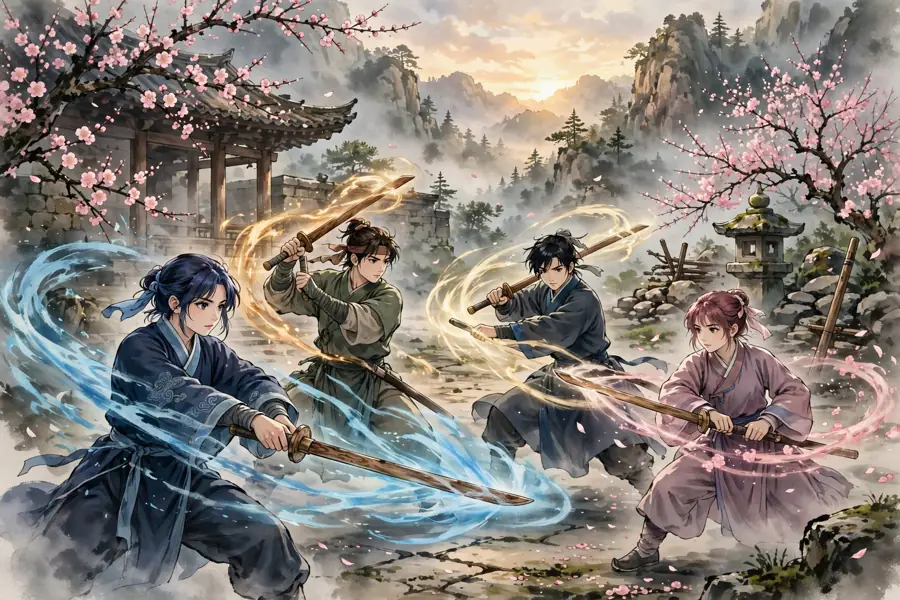
Why Return of the Mount Hua Sect Is So Popular
The series has earned a devoted following, and its popularity is no accident. Several qualities set it apart from the crowded field of martial arts manhwa.
- A protagonist with real personality. Cheongmyeong is not a bland power fantasy hero. He is loud, rude, cunning, and hilarious — and his flaws make his rare moments of sincerity hit much harder.
- Comedy that actually lands. The series balances its serious themes with genuinely funny moments, from Cheongmyeong’s shameless money-making schemes to the disciples’ suffering during his brutal training sessions.
- Meaningful character growth. The young disciples of Mount Hua start weak and undisciplined, and watching them earn their strength chapter by chapter is deeply satisfying.
- Strategic depth. Battles are won with planning and cunning as much as raw power, and the sect-building storyline gives the series a unique flavor.
- Stunning action art. The manhwa adaptation, illustrated by LICO, delivers dynamic fight choreography and expressive character acting that elevate every major confrontation.
The web novel, written by Biga, began serialization in 2019 and built a large fanbase in Korea before the manhwa adaptation launched in 2021. The series has since won major recognition, including a Presidential Award at the 2022 Korea Contents Awards, and an animated adaptation has been announced.
Reading Order and Where to Read
The story exists in two main forms, and the order you approach them in is up to you:
- The web novel (original): Written by Biga, this is the source material. It is further ahead in the story and contains the most complete version of the plot. An official English edition is available under the title Return of the Mount Hua Sect.
- The manhwa (adaptation): Illustrated by LICO and serialized on LINE Webtoon in English under the title Return of the Blossoming Blade. This is the version most international readers start with, thanks to its full-color art and dramatic presentation.
Most readers begin with the manhwa and switch to the novel when they cannot wait for the next chapter. If you want to read legally and support the creators, the official platforms are the way to go — you can find more background on the series, its publication history, and its adaptations on its Wikipedia page.
Frequently Asked Questions
Is Return of the Mount Hua Sect the same as Return of the Blossoming Blade?
Yes. Return of the Blossoming Blade is the official English title used for the manhwa on LINE Webtoon, while Return of the Mount Hua Sect is the title most commonly used for the original web novel. Both refer to the same story by Biga.
Who wrote and illustrated the series?
The original web novel was written by Biga, and the manhwa adaptation is illustrated by LICO. The webtoon is serialized by Naver in Korea.
Is the series complete or ongoing?
The series is ongoing. The manhwa is released in seasons, with new chapters arriving regularly on the official platform.
Is Return of the Mount Hua Sect suitable for new manhwa readers?
Absolutely. While it rewards familiarity with murim tropes, the series explains its world clearly and its mix of comedy and action makes it accessible even if you have never read a martial arts manhwa before.
What should I read after Return of the Mount Hua Sect?
If you enjoy long cultivation journeys with a determined protagonist, Martial Peak manhua is a natural next read — it follows a lowly disciple’s climb to the peak of the martial world across a massive, decades-spanning story.
Final Thoughts
Return of the Mount Hua Sect works because it understands that a great martial arts story is not just about who swings the sword hardest. It is about what the sword is being swung for. Cheongmyeong’s journey to rebuild Mount Hua — through training, scheming, trading, and fighting — is ultimately a story about loyalty, legacy, and refusing to let something precious fade away. Whether you come for the action, the comedy, or the characters, this is one murim series that earns every bit of its reputation.
1 thought on “Return of the Mount Hua Sect Manhwa: A Reader’s Guide”