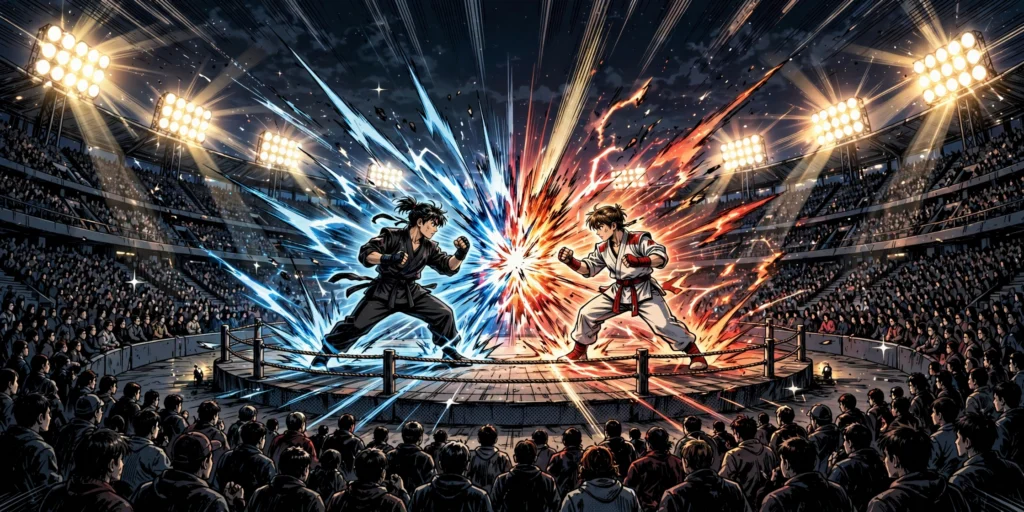
The God of High School is one of the most influential action manhwa ever published, and it helped define what Korean webtoons could achieve on the global stage. What starts as a straightforward martial arts tournament story expands into a sprawling epic about gods, demons, and mythologies from around the world, all drawn in a style that turned weekly fights into some of the most talked-about panels in webtoon history. If you have been meaning to start this series, this guide covers everything you need: the story, the characters, where to read it legally, and how it compares to the anime adaptation.
What Is The God of High School?
The God of High School is a South Korean manhwa released as a webtoon, written and illustrated by Yongje Park. It was serialized on Naver Webtoon, the Korean platform where it ran for over a decade before concluding. An official English translation launched on Line Webtoon, the international version of the platform, which is how most Western readers discovered the series.
The story centers on Jin Mori, a 17-year-old martial artist from Seoul who lives for a good fight. He is invited to a massive martial arts competition called The God of High School, a tournament that gathers fighters from high schools all across South Korea, first through regional preliminaries and then at a national level, to select representatives for a World Tournament. The prize is extraordinary: the winner gets any single wish granted by the mysterious corporation running the event, no questions asked.
That hook — a tournament where the stakes are literally one wish — is only the beginning. As Mori fights his way through the rounds, the story opens up into something much larger, weaving Korean mythology, Taoist concepts, and legends from around the world into a battle series that keeps escalating from volume to volume.
The Story and Setting
Three Realms
The world of The God of High School is built around three realms:
- The Human Realm — essentially our world, populated by ordinary humans and the weakest of the three realms.
- The Sage Realm — also called the Demon Realm, home to mythical creatures, spirits, and monsters such as dragons, minotaurs, and phoenixes.
- The Heavenly Realm — the most powerful realm, inhabited by gods drawn from mythologies and legends across cultures.
At the dawn of time, humans, demons, and gods lived together. The gods granted weak humans the ability to borrow divine powers — a system called Borrowed Power, or “Charyeok” in Korean — so humanity could defend itself. After the realms were split apart, humans kept the ability to use Borrowed Power freely, with one rule: never attack the gods with it.
From Tournament to Mythology
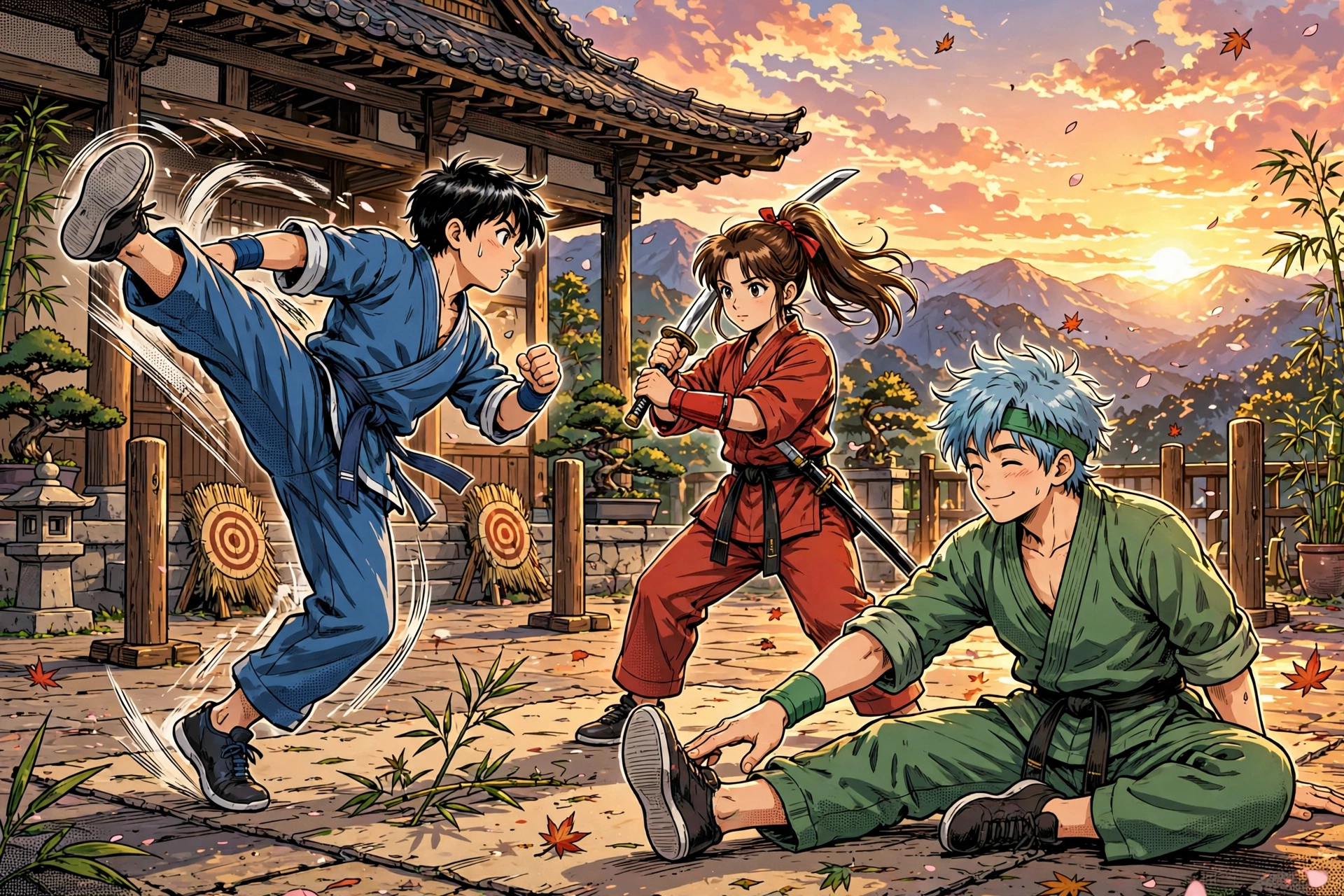
The first arc of the series is a pure tournament arc, and it is one of the best in the medium. Mori meets his future teammates during the preliminaries: Daewi Han, a Full-Contact Karate expert fighting to save a sick friend, and Mira Yoo, a master swordswoman of the Moonlight Sword style who entered to secure her family’s future. The three form the Korean Team, and their fights are creative, kinetic, and beautifully choreographed.
Behind the scenes, though, the tournament is run by Mujin Park, a charismatic figure with a master plan that goes far beyond martial arts. As the story progresses, the tournament structure gives way to wars between realms, mythological figures fighting as equals, and Mori’s own hidden identity — he is far more than a talented high school fighter, and discovering what he really is becomes one of the series’ central mysteries.
Main Characters
Jin Mori
The carefree, fight-loving protagonist who practices a fictional Korean martial art called Renewal Taekwondo. Mori is the rare battle-shonen hero who genuinely loves fighting for its own sake rather than for glory or revenge. His true identity connects him to one of the most famous figures in Chinese literature, and that revelation reframes the entire story.
Daewi Han
Mori’s best friend and teammate, a 17-year-old Full-Contact Karate fighter. Daewi starts as a hard-working young man trying to earn money for his best friend’s hospital bills, and his loyalty to his friends becomes the emotional core of the team. His Borrowed Power comes from the Haetae, a Korean mythical creature that grants him control over water.
Mira Yoo
The swordswoman of the group and the 25th master of the Moonlight Sword style. Mira initially joins the tournament hoping to find a worthy husband to carry on her family’s martial arts school, but her friendship with Mori and Daewi gives her a new path. Her Borrowed Power is drawn from the legendary Chinese general Lü Bu.
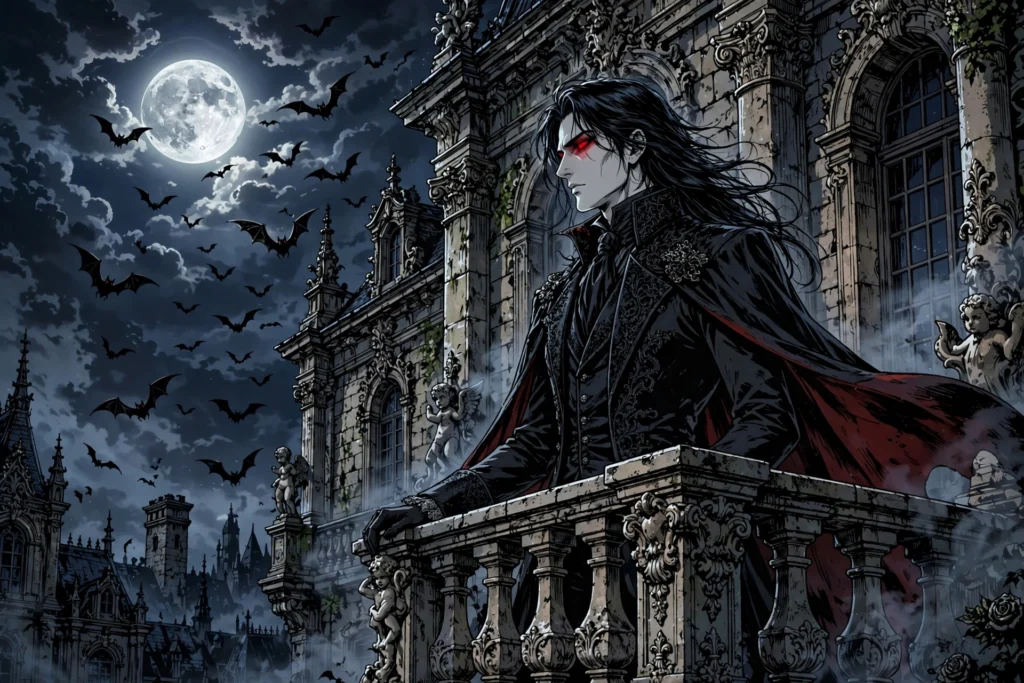
Mujin Park
The main antagonist and the mastermind behind the tournament. A member of the National Assembly of Korea, Mujin operates on a scale no other character does — his plans involve reshaping the world itself. His Borrowed Power, called “Longinus,” manifests as crosses on his hands that let him control gravity.
Where to Read The God of High School Legally
The full series is available through official channels. The English translation was released on Line Webtoon, Naver’s official international platform, where readers can access the series legally and support the creator. Reading through official platforms is always the best option — it supports Yongje Park and the artists who made the series possible, and it guarantees you are getting the proper translation.
For background details on the series’ publication history, the anime adaptation, and the full character roster, the Wikipedia page for The God of High School is a reliable reference that stays updated with verified facts.
The Anime Adaptation
An anime television series produced by MAPPA aired in the summer of 2020, running for 13 episodes. It covers the early tournament arc of the manhwa with spectacular animation — the fight choreography in the anime is genuinely impressive, and it introduced the series to a wave of new fans.
That said, the anime only adapts a small fraction of the manhwa. The webtoon runs far longer and the story expands dramatically beyond where the anime ends. If you watched the anime and want to know what happens next, the manhwa is the only place to continue the story, and the escalation is worth experiencing.
Why The God of High School Is Worth Reading
- The fights are legendary. Yongje Park’s paneling and choreography are among the best in webtoons. Fights are readable, creative, and escalate in ways that feel earned.
- The mythology is deep. The series draws on Korean folklore, Chinese legends, and global mythologies, blending them into a coherent power system.
- The trio dynamic works. Mori, Daewi, and Mira have genuine chemistry, and their friendship grounds a story that eventually reaches cosmic stakes.
- It is a completed series. You can read the whole story from start to finish without waiting years for a conclusion.
- It influenced the genre. Alongside Solo Leveling and Tower of God, this series helped define the modern action manhwa wave.
Reading Guide: What to Know Before You Start
- Start from chapter one. The tournament arc sets up everything — the power system, the characters, and the mysteries. Skipping ahead will leave you lost.
- Expect the tone to shift. The story starts light and tournament-focused, then grows progressively darker and more mythological.
- Pay attention to the lore drops. Early chapters plant seeds about the realms and Borrowed Power that pay off much later.
- The art evolves. Like most long-running webtoons, the art style develops significantly over the series’ run.
- Pair it with other classics. If you enjoy completed action manhwa with strong worldbuilding, our complete guide to Noblesse covers another foundational series that helped shape the genre.
Frequently Asked Questions
Is The God of High School finished?
Yes. The manhwa concluded its serialization after running for over a decade on Naver Webtoon. New readers can enjoy the complete story from beginning to end.
Who wrote The God of High School?
The series was written and illustrated by Yongje Park, who created it as a webtoon on Naver’s platform.
Is The God of High School a manhwa or a webtoon?
Both. Manhwa is the Korean term for comics, and webtoon refers to the vertical-scroll digital format. The God of High School is a manhwa published as a webtoon.
Does the anime cover the whole story?
No. The 13-episode MAPPA anime only adapts the early tournament arc. The manhwa continues far beyond that point, and the story grows much larger in scope.
Is The God of High School appropriate for younger readers?
The series features intense martial arts violence and becomes darker as it progresses. It is best suited for teen and adult readers.
What is Borrowed Power?
Borrowed Power (Charyeok) is the power system of the series — the ability of humans to channel the strength of gods, demons, and mythical creatures. Fighters who rely on martial arts alone are called Genuine Fighters.
Final Thoughts
The God of High School earns its place among the greats of the medium. It delivers the tournament thrills of classic battle series while building one of the most ambitious mythological worlds in webtoons, and Yongje Park’s action choreography remains a benchmark years after the series concluded. Start with the official English release on Line Webtoon, take the tournament arc at its own pace, and let the story’s scale unfold. For fans of foundational action manhwa, it is essential reading — and it pairs perfectly with our complete guide to Noblesse, another series that defined an era of Korean comics.

1 thought on “The God of High School Manhwa: Complete Reading Guide”