If you have spent any time in manhwa circles lately, you have probably heard the name Omniscient Reader’s Viewpoint spoken with unusual reverence. Fans do not just recommend this series — they recruit for it, the way people do for stories that genuinely changed how they think about fiction. But what exactly is it, who are the characters everyone keeps talking about, and where should a brand-new reader begin? This complete guide answers all of that, with a full story overview, character breakdowns, the themes that make it special, and a clear reading order for newcomers.
What Is Omniscient Reader’s Viewpoint?
Omniscient Reader’s Viewpoint — often shortened to ORV by fans — began life as a Korean web novel written by the author duo known as Sing Shong. The novel was serialized online and told a complete, finished story, which is one reason readers trust it: unlike many long-running series, it was built toward a real ending. The web novel’s popularity led to a manhwa (Korean comic) adaptation illustrated by Sleepy-C, which is serialized on Naver Webtoon in Korea and officially available in English on WEBTOON, where it has gathered an enormous global readership and new episodes arrive every Tuesday.
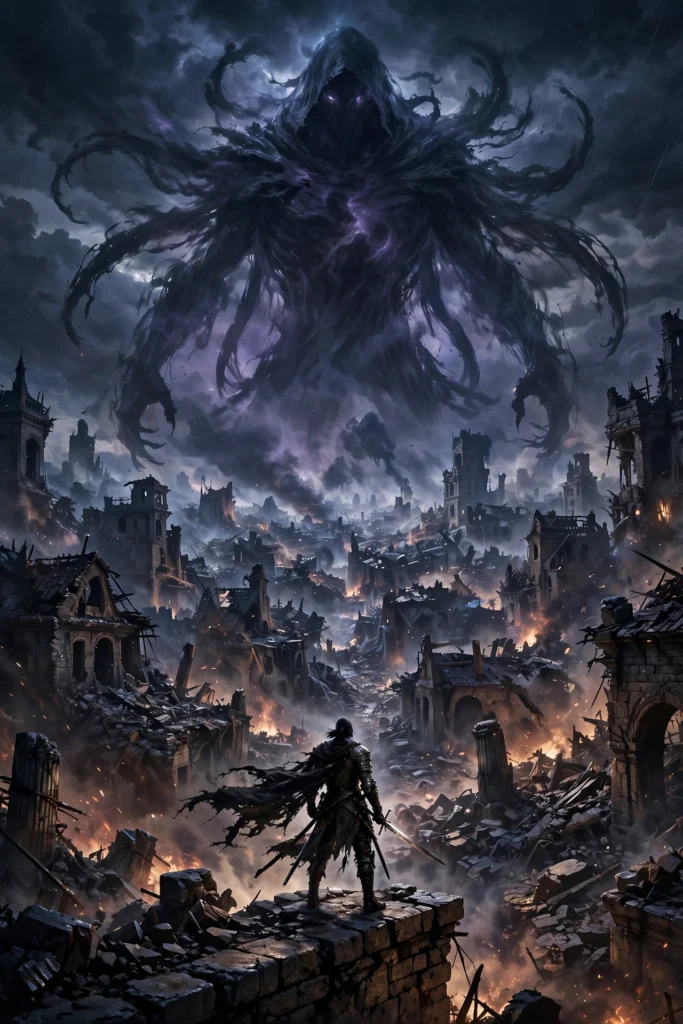
The series sits at the intersection of several genres: apocalyptic survival, fantasy, psychological drama, and meta-fiction. It is a story about stories themselves — about what it means to read, to be read, and to keep turning pages when the world is ending. That self-aware premise is the engine of everything that follows, and it is the reason the series has inspired one of the most devoted fandoms in modern manhwa.
The Story: A Reader Trapped Inside His Favorite Novel
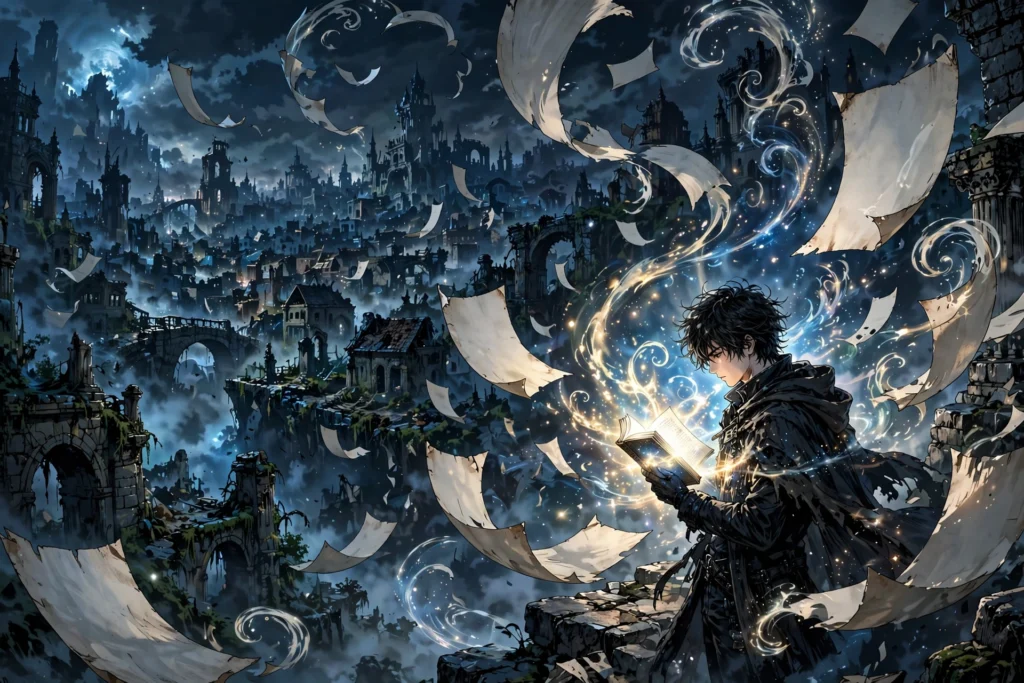
The story opens with Kim Dokja, an unremarkable office worker whose one great passion is reading. For over a decade, he has followed an obscure web novel called Three Ways to Survive the Apocalypse, a bleak survival fantasy written by an anonymous author. The novel has almost no readers — Dokja is, by the final chapter, quite literally its only reader. Then, on the day he finishes the last chapter, something impossible happens: the events of the novel begin happening in the real world.
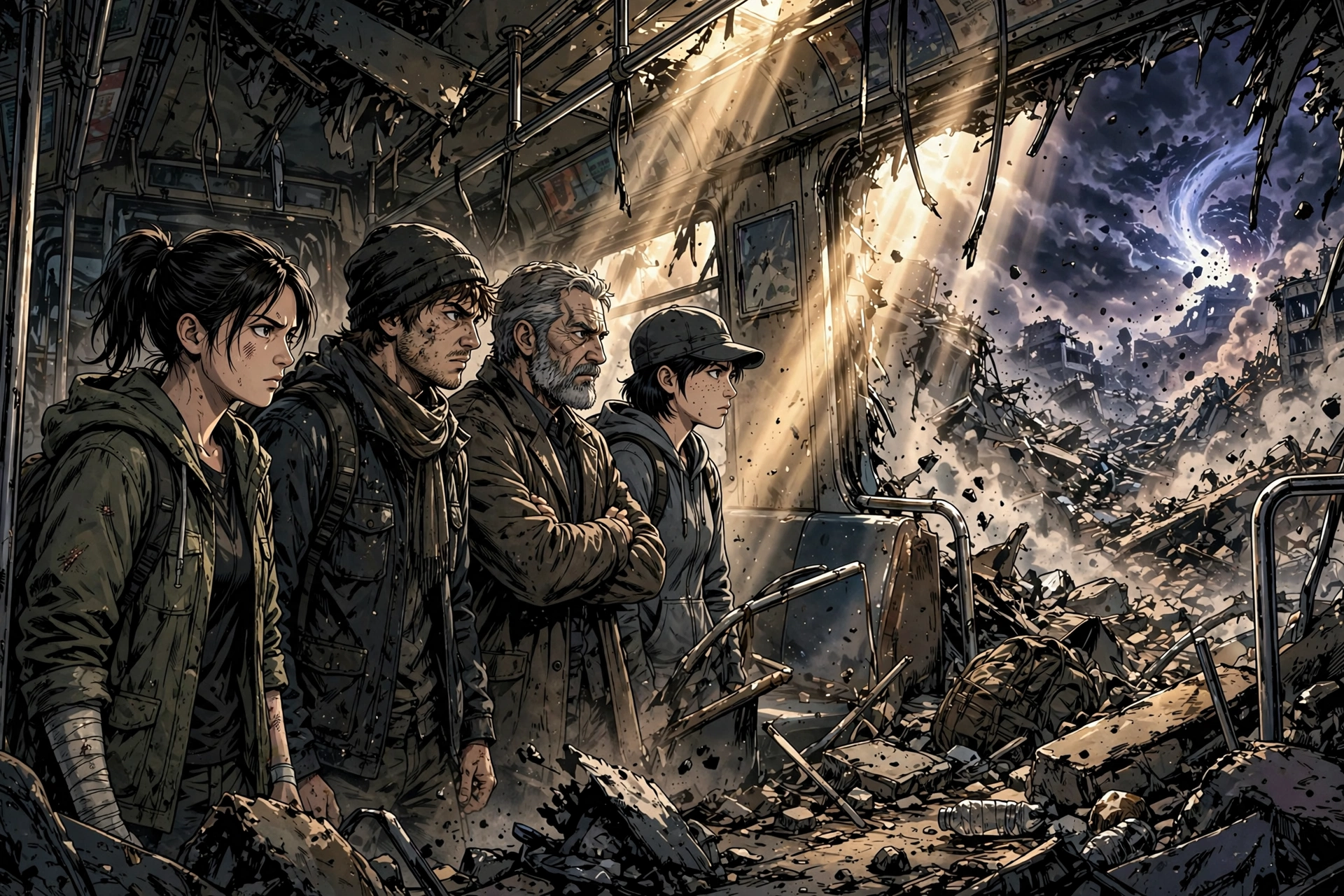
As Dokja rides the subway home, the world transforms around him. A goblin-like creature called a dokkaebi appears and announces that the world has become a series of deadly “scenarios” — structured survival games in which ordinary people must complete missions or die. Mythical beings called constellations watch from above, sponsoring humans the way patrons sponsor gladiators, all for their entertainment. Civilization collapses in a single evening, and the survivors of that first subway car must figure out the rules of a game that was, until hours ago, fiction.
Here is the twist that makes the premise sing: Dokja is the only person alive who knows how the story goes. He has read all 3,149 chapters. He knows which characters live, which die, which choices lead to survival, and which lead to ruin. Armed with nothing but foreknowledge and his wits — he is pointedly not the strongest fighter in the room — Dokja sets out to change the story’s tragic course and write a better ending than the one the author gave it.
The catch is that the novel’s protagonist, Yoo Joonghyuk, is also alive in this new reality, and he does not take kindly to a stranger who seems to know his life. What follows is one of the most fascinating central relationships in modern fiction: a reader and the protagonist he has read about for years, circling each other with a mixture of admiration, suspicion, rivalry, and something deeper that the story takes its time to reveal.
From there, the plot expands into a vast, intricately structured saga. The scenarios escalate from subway survival to company-building, to wars between constellations, to journeys across dimensions. New companions join Dokja — each with their own arcs, traumas, and moments of glory — and the story continually asks its central question in new forms: if you knew the ending of the story you were living, would you try to change it, and what would it cost you?
Meet the Main Characters
ORV’s cast is widely considered one of its greatest strengths. Every major character is written with unusual psychological depth, and the series is famous for making readers care fiercely about characters who first appear as background figures. Here are the essential names to know.
Kim Dokja — The Reader Who Knows the Ending
Kim Dokja is the protagonist, and he is deliberately not a conventional hero. He is an ordinary office worker in his late twenties — not particularly strong, not a chosen one, not blessed by destiny. His only real power is knowledge: he alone has read the novel that the world is now following, and he uses that foreknowledge to navigate scenarios that kill nearly everyone else. Dokja is strategic, self-sacrificing to a fault, and defined by his love of stories — reading was his refuge from a lonely life, and that love becomes both his weapon and his wound. His character arc, which explores what it means to be a “reader” of other people’s lives, is the emotional core of the entire series.
Yoo Joonghyuk — The Protagonist of the Novel
Yoo Joonghyuk is the hero of Three Ways to Survive the Apocalypse within the fiction — a stoic, devastatingly competent regressor who has lived through the apocalypse countless times, dying and restarting in an endless loop. He is cold, ruthlessly pragmatic, and carries the weight of more lifetimes of loss than any person should bear. To Dokja, he was once just words on a screen — a character to admire from a distance. Meeting him in the flesh, and slowly understanding the suffering behind the stoicism, forces Dokja to confront the difference between reading about someone’s pain and witnessing it. Their dynamic — part rivalry, part partnership, part something neither can name — is the relationship the whole fandom obsesses over.
The Company — Dokja’s Companions
As the scenarios progress, Dokja gathers a group of survivors who become known as Kim Dokja’s Company, and they are the heart of the story’s warmth amid its darkness:
- Yoo Sangah — Dokja’s kind-hearted coworker, whose empathy and moral clarity anchor the group. She represents the ordinary person’s courage in extraordinary circumstances.
- Lee Hyunsung — a former soldier whose strength and loyalty make him the company’s shield. His quiet decency contrasts with the brutality of the scenarios.
- Jung Heewon — a fierce, justice-driven fighter who evolves from a struggling survivor into one of the story’s most formidable and beloved warriors.
- Lee Jihye — a sharp-tongued high school student who grows from a scared kid into a brave admiral of the seas, with one of the best growth arcs in the series.
- Lee Gilyoung — a young boy with a special bond with insects and monsters, whose innocence the company fights to protect.
- Han Myungoh, Gong Pildu, and others — a rotating cast of allies, rivals, and morally gray survivors who keep the world feeling populated and unpredictable.
What makes the company special is that the story treats every member as a full person rather than a sidekick. Each gets defining moments, and the series is famous for chapters that reframe earlier events from another character’s perspective, revealing hidden depths.
The World: Scenarios, Constellations, and Sponsors
Understanding ORV’s world means understanding its rules. When the apocalypse begins, mysterious beings called dokkaebi announce that Earth has become a paid broadcast — a real-life survival show watched by constellations, godlike entities from myth and history who sponsor humans they find entertaining. To survive, humans must complete scenarios: timed missions with specific conditions, ranging from “kill the monsters in this subway car” to continent-spanning wars.
Humans who attract a constellation’s favor become “incarnations” — empowered agents who receive abilities, called stigmas, channeled from their sponsors. This creates a fascinating economy of attention: survival depends not just on strength but on being interesting enough to watch. Dokja, who understands the system better than anyone because he read about it, manipulates this economy brilliantly — performing for the constellations, cutting deals with them, and occasionally turning their hunger for stories against them.
The worldbuilding only deepens from there, expanding into rival companies, demon realms, the politics of the constellations themselves, and metaphysical questions about who writes the scenarios and why. It is the kind of setting that rewards close reading, with details planted early paying off hundreds of chapters later.
Themes That Make It Special
Beneath the action and spectacle, ORV is a story about stories, and its themes are what elevate it from a great survival series to a modern classic:
- The power of reading. The series is a love letter to readers. Dokja’s defining trait is not strength but the fact that he kept reading — and the story argues, beautifully, that reading is itself a form of living many lives.
- Fate versus free will. If you know the future, are you obligated to change it? Dokja constantly wrestles with whether his foreknowledge is a gift or a cage, and whether the people around him are characters in a story or free agents.
- Sacrifice and what it costs. ORV does not romanticize self-sacrifice; it interrogates it. Dokja’s habit of throwing his life away for others is treated as both heroic and pathological, and the people who love him refuse to let him get away with it.
- Stories as survival. In a world where constellations feed on narratives, telling a good story is literally a survival skill. The series keeps returning to the idea that the stories we tell about each other are what keep us human.
- Companionship. For all its cosmic scope, the story’s thesis is intimate: that no one survives alone, and that the people who read your story with you — your company — are what make the ending worth reaching.
Reading Order: Where Should New Readers Start?
New readers face one happy question: the web novel or the manhwa first? There is no wrong answer, but here is how most fans frame the choice:
- Start with the manhwa if you want the most accessible entry point. The webtoon adaptation’s art is spectacular — Sleepy-C’s illustrations bring the scenarios, constellations, and action sequences to vivid life — and it is the version most new fans discover first. You can read it officially in English on WEBTOON’s official platform, which supports the creators directly.
- Read the web novel if you want the complete, finished story. The novel is complete, so there is no waiting for new chapters, and it contains the full depth of the prose, inner monologues, and foreshadowing that even a great adaptation must compress.
- Do both, in either order. Many fans read the manhwa first for the visual experience, then dive into the novel for the complete story — or read the novel first and then enjoy watching favorite scenes adapted. Each version enriches the other.
- Avoid spoilers aggressively. ORV is a story built on reveals and recontextualization. The fandom is generally good about spoiler tags, but the series’ biggest twists are worth experiencing unspoiled.
One important note: stick to official sources. The creators and artists behind ORV deserve support for their work, and official platforms offer the best translation quality anyway. Unofficial aggregate sites often carry poor translations that flatten the story’s careful wording — and this is a series where the wording matters.
Why Is Omniscient Reader’s Viewpoint So Popular?
ORV’s rise from a niche web novel to a global phenomenon did not happen by accident. Several factors combined to make it one of the defining stories of its generation:
- A premise unlike anything else. “The only reader of a novel watches it come true” is a hook that immediately separates ORV from every other apocalypse story. It is original without being gimmicky.
- Meta-fiction done right. Stories about stories can feel clever but empty; ORV uses its meta premise to generate genuine emotion. The reader-protagonist dynamic is not a trick — it is the emotional thesis.
- Characters readers would die for. The fandom’s devotion to Dokja, Joonghyuk, and the company is legendary. Fan art, fan fiction, and discussion fill every corner of the internet, keeping the series alive between chapters.
- Payoff-driven plotting. The author plants details with extraordinary patience. Moments that seem throwaway return hundreds of chapters later with devastating significance, rewarding careful readers.
- Universal themes. Beneath the Korean web-novel trappings, ORV is about loneliness, love, and why stories matter — things every reader on Earth understands.
- Major adaptations. The manhwa brought the story to a massive new audience, and the franchise has expanded into a live-action film and an announced anime adaptation, each wave bringing new readers to the source material.
Beyond the Manhwa: The Film and Other Adaptations
ORV’s popularity has made it a natural candidate for adaptation. The story has already made the leap to the big screen with Omniscient Reader: The Prophecy, a Korean live-action film that brings Dokja and Joonghyuk’s story to cinemas, and an anime adaptation has been announced as well. If you want the full breakdown of the movie — its cast, story, production, and how it handles the source material — check out our complete guide to Omniscient Reader: The Prophecy.
Frequently Asked Questions
Is Omniscient Reader’s Viewpoint finished?
Yes — the original web novel by Sing Shong is complete, telling a full story from beginning to end. The manhwa adaptation is still ongoing as it adapts the novel’s story, releasing new episodes weekly. That means new readers can enjoy a finished narrative in novel form while following the gorgeous adaptation as it continues.
Do I need to read the novel before the manhwa?
No. The manhwa is designed to stand on its own and is the most popular entry point for new fans. The novel offers the complete story with greater depth, so many readers enjoy the manhwa first and then move to the novel — but either order works, and each version enhances the other.
What genre is Omniscient Reader’s Viewpoint?
It blends apocalyptic survival, fantasy, action, psychological drama, and meta-fiction. If you enjoy stories like Solo Leveling or Sword Art Online for their game-like systems but want deeper character writing and a story about storytelling itself, ORV is an ideal next read.
Who is the main character — Kim Dokja or Yoo Joonghyuk?
Kim Dokja is the protagonist and viewpoint character; the story is told through his eyes as the reader who knows the plot. Yoo Joonghyuk is the protagonist of the novel-within-the-novel and functions as the deuteragonist — the second lead whose relationship with Dokja drives the emotional core of the series. You need both of them for the story to work.
Is Omniscient Reader’s Viewpoint appropriate for younger readers?
The official English release rates the series for teens, but parents should know it contains intense apocalyptic violence, death, and dark psychological themes. It is best suited for older teens and adults who are comfortable with high-stakes survival storytelling.