If you have heard friends raving about Solo Leveling, Tower of God, or The Boxer, you have already brushed up against manhwa — the Korean comics phenomenon that has taken the world by storm. But what exactly is manhwa, how is it different from manga, and where do you start?
This complete guide covers everything: the history, the format, the genres, and the best way to dive in.
What Is Manhwa?
Manhwa (만화) is the Korean word for comics and print cartoons. Outside Korea, the term specifically means comics created in South Korea — just as “manga” means comics from Japan and “manhua” means comics from China.
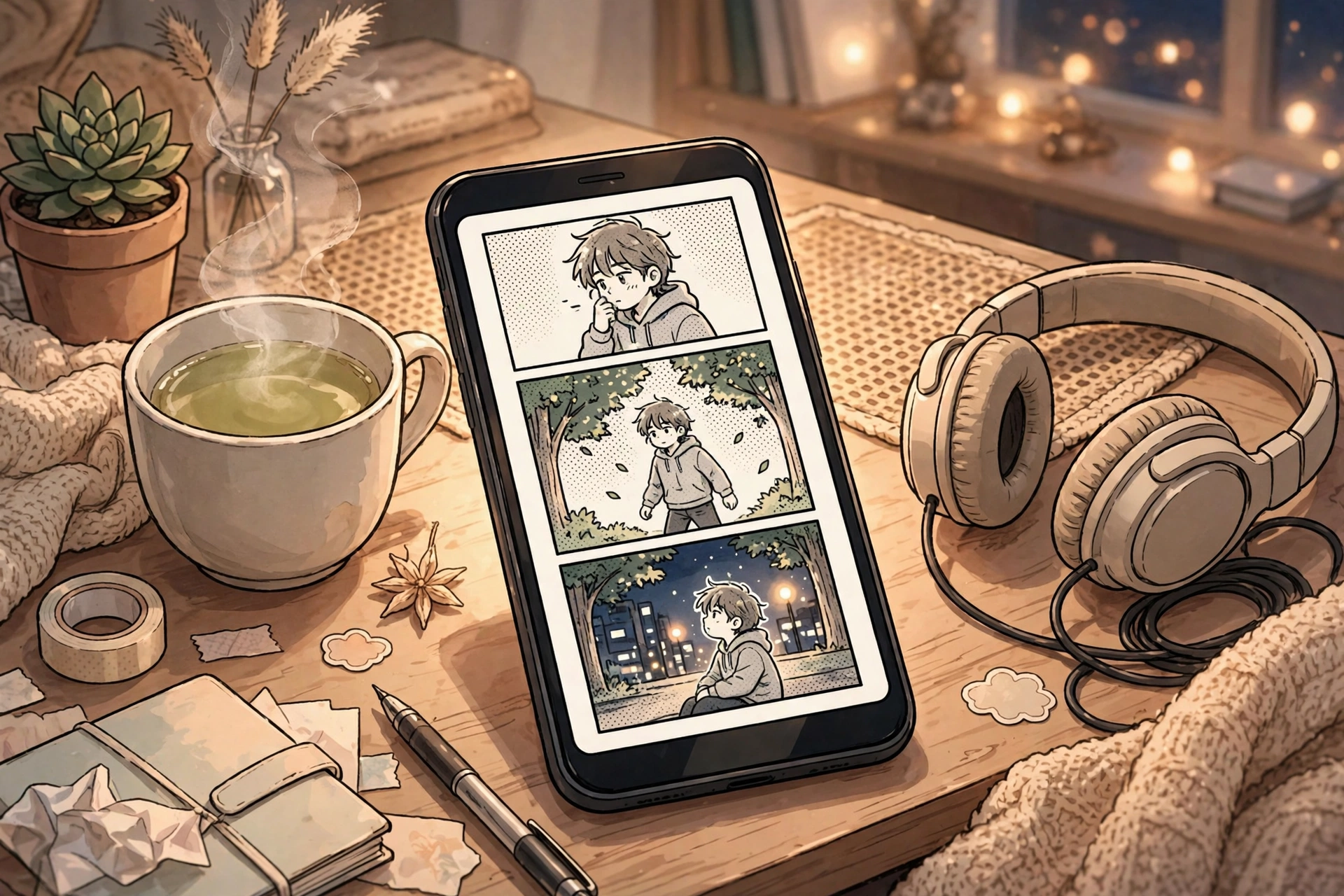
Modern manhwa is dominated by webtoons: full-color comics designed to be read by scrolling vertically on a phone. This format was pioneered by Korean platforms in the early 2000s and has since become a global standard. When most people say “manhwa” today, they mean these vertical-scroll webtoons.
A Brief History of Manhwa
- Early roots: Korean comics trace back to the early 1900s, with satirical cartoons in newspapers during the Japanese occupation era.
- Post-war boom: After the Korean War, cheap rental comic shops (manhwabang) made comics accessible to everyone, and genres exploded.
- The censorship years: Strict government censorship through the 1970s–90s pushed manhwa toward children’s content, stalling artistic growth.
- The webtoon revolution: In 2003, Daum launched its webtoon portal, followed by Naver’s LINE Webtoon. Free, full-color, phone-friendly comics changed everything.
- Global explosion: In the 2010s and 2020s, platforms like WEBTOON and Tapas brought Korean comics to hundreds of millions of readers worldwide, and anime adaptations like Solo Leveling turned manhwa into a mainstream global phenomenon.
Manhwa vs. Manga: Key Differences
New readers often confuse the two. Here is how they differ:
- Origin: Manhwa comes from South Korea; manga comes from Japan.
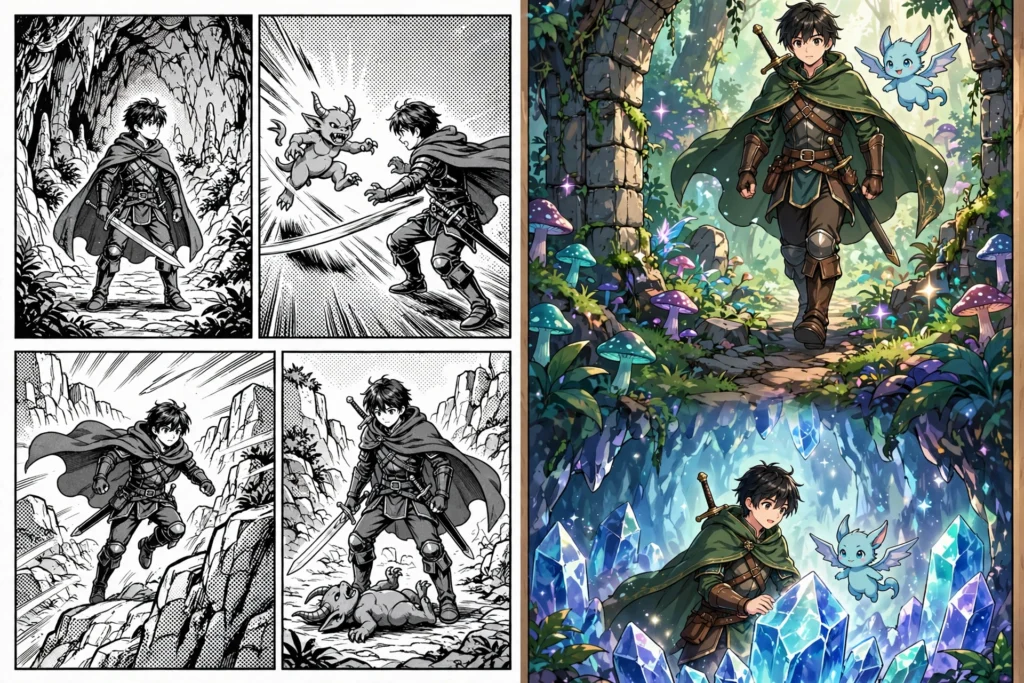
- Color: Most modern manhwa is full color; most manga is black and white.
- Reading direction: Manhwa reads left-to-right (like Western comics); manga reads right-to-left.
- Format: Manhwa is usually a vertical-scroll webtoon optimized for phones; manga is typically paginated, designed for print volumes.
- Release schedule: Manhwa chapters often release weekly in short episodes; manga chapters appear in weekly magazines, then get collected into volumes.
- Art style: Manhwa leans toward polished digital art with dramatic coloring and effects; manga emphasizes detailed ink linework and screentone shading.
Neither is better — they are different traditions with different strengths. Many readers happily enjoy both.
Popular Manhwa Genres
Manhwa covers every genre imaginable, but a few dominate the charts:
- Action/Fantasy: The biggest category. Hunter systems, dungeon raids, martial arts, and overpowered protagonists. Think Solo Leveling, The Boxer, Eleceed.
- Romance: From sweet high-school love stories to mature office romances. True Beauty and Business Proposal started as webtoons.
- Isekai and regression: Reincarnation and time-travel stories are a manhwa staple — protagonists reliving their lives to fix past mistakes.
- Thriller and horror: Gritty crime stories and psychological horror with cinematic pacing. Sweet Home became a global Netflix hit.
- Slice of life: Relatable everyday stories that dominate the daily-pass charts.
- Villainess: A uniquely popular subgenre where the heroine reincarnates as the villainess of a novel and tries to change her fate.
How to Read Manhwa
Reading manhwa is wonderfully simple:
- Pick a platform. Start with a legal webtoon app (see below) — they are free with optional paid fast-passes for early chapters.
- Scroll, don’t flip. Manhwa is designed for vertical scrolling. Read top to bottom, panel by panel.
- Start with completed series. Ongoing series update weekly, but completed series let you binge without cliffhanger torture.
- Use the daily pass wisely. Many platforms give you one free chapter per day of completed premium series — perfect for steady reading.
- Support the creators. Legal platforms share revenue with artists. If you love a series, consider buying fast passes or merchandise.
Ready for recommendations? Check out our curated list of the best manhwa of all time to find your next obsession.
Where to Read Manhwa Legally
Always read on official platforms. They are free or cheap, offer the best translations, and support the creators:
- WEBTOON — The biggest platform, with thousands of free series and the famous “Originals” lineup.
- Tapas — A huge library of webtoons and web novels, strong in romance and fantasy.
- Tappytoon — Premium licensed series with high-quality translations.
- Manta — A subscription service with unlimited access to a curated library.
- Lezhin — Known for mature, high-quality titles.
Avoid pirate aggregator sites. They steal from creators, often carry malware, and offer worse translations anyway. The legal options are genuinely excellent — there is no reason to pirate.
You can explore the world’s largest official library at WEBTOON, where thousands of series are completely free to read.
Manhwa Adaptations Worth Watching
Manhwa’s visual storytelling adapts beautifully to screen:
- Solo Leveling — The anime adaptation became a global sensation with jaw-dropping action sequences.
- Tower of God — A faithful anime take on the legendary webtoon.
- Sweet Home — Netflix’s live-action horror series.
- Business Proposal — The K-drama adapted from the beloved webtoon.
- True Beauty — Another webtoon-to-K-drama success story.
Watching an adaptation is a great way to discover new series — then read the original for the full story.
Tips for New Manhwa Readers
- Don’t judge by the first chapter. Webtoons often start slow; give a series 5–10 chapters before deciding.
- Check the status. Know whether a series is ongoing, completed, or on hiatus before you get attached.
- Explore beyond action. Romance, thriller, and slice-of-life webtoons are where the medium truly shines.
- Join the community. Comment sections and fan communities are half the fun — theories, fan art, and episode discussions.
- Try web novels too. Many great manhwa started as web novels, and reading ahead is a popular (legal) option on platforms like Tapas.
Frequently Asked Questions
Is manhwa the same as manga?
No. Manhwa refers to Korean comics, while manga refers to Japanese comics. Manhwa is typically full-color, reads left-to-right, and uses a vertical-scroll format, while manga is usually black-and-white, reads right-to-left, and uses a page format.
Where can I read manhwa for free legally?
WEBTOON and Tapas offer thousands of series completely free, supported by ads or optional fast passes. Tappytoon, Manta, and Lezhin also offer free chapters and trials. These official platforms pay the creators.
What does “webtoon” mean?
Webtoon is a blend of “web” and “cartoon.” It refers to comics designed for digital reading, usually in a vertical-scroll, full-color format. The term originated in South Korea and is now used worldwide.
Is Solo Leveling a manhwa or manga?
Solo Leveling is a manhwa — it was created in South Korea, originally as a web novel by Chugong, then adapted into a webtoon illustrated by DUBU (REDICE Studio). Its full-color vertical format is classic manhwa.
How often do new manhwa chapters release?
Most ongoing series release one chapter per week. Completed series can be binged in full, and many platforms offer a daily free chapter of premium completed titles.
Final Thoughts
Manhwa has grown from a Korean niche into one of the world’s most exciting storytelling mediums — full-color, phone-native, and endlessly creative. Whether you are here for epic action, swooning romance, or mind-bending thrillers, there is a webtoon with your name on it.
Pick a platform, find a series, and start scrolling. Welcome to the obsession.

1 thought on “Manhwa: The Complete Guide to Korean Comics (2026)”