What Is the Difference Between Manga and Manhwa? 7 Key Differences Explained
If you are new to Asian comics, one question comes up constantly: what is the difference between manga and manhwa? The two terms sound similar and both describe comics, but they come from different countries, look different, and are read in different ways.
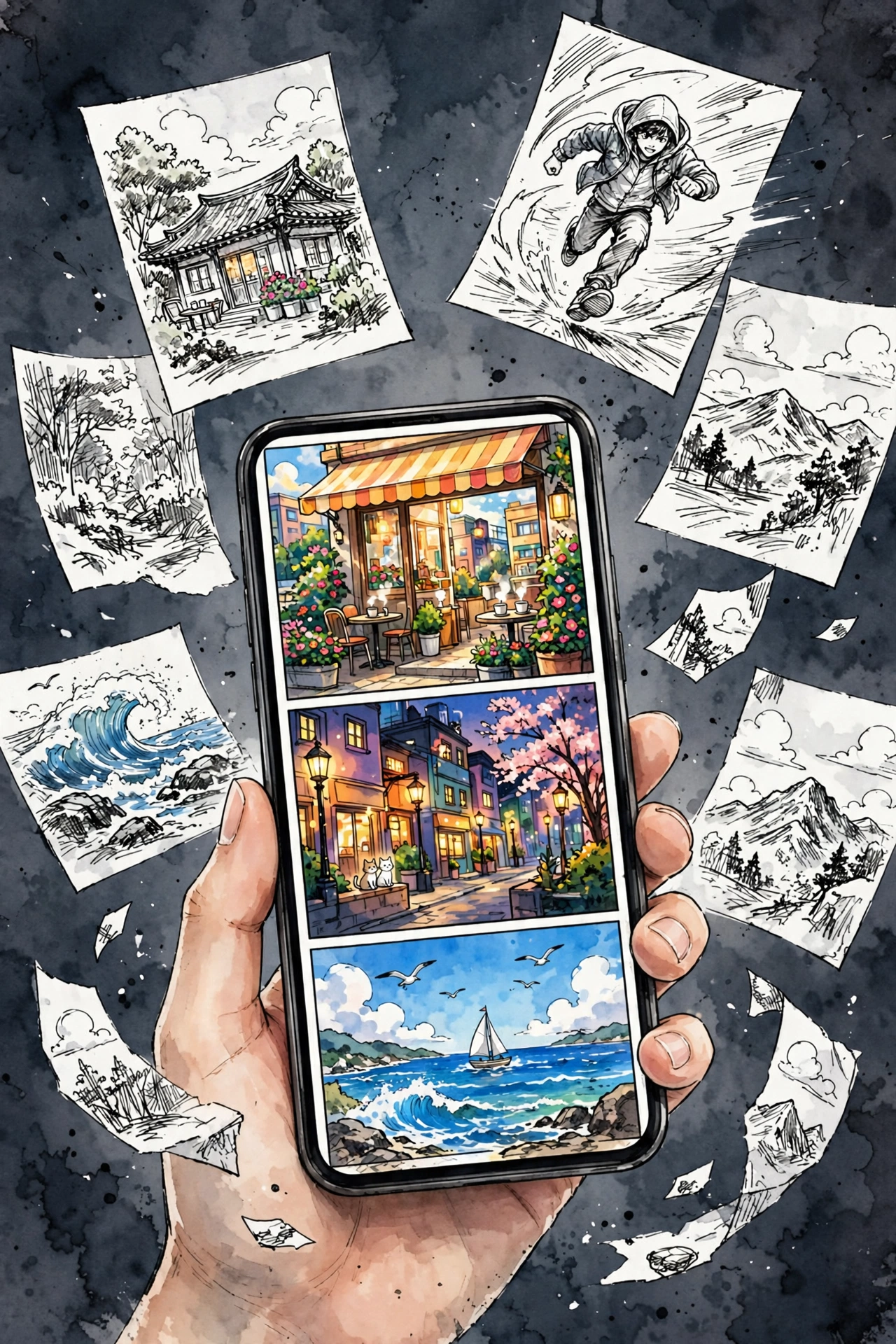
This guide breaks down the seven key differences between manga and manhwa so you can tell them apart instantly and know exactly what you are picking up.
Manga vs Manhwa at a Glance
| Feature | Manga | Manhwa |
|---|---|---|
| Origin | Japan | South Korea |
| Color | Mostly black and white | Usually full color |
| Reading direction | Right to left | Left to right / top to bottom |
| Primary format | Print magazines and volumes | Digital vertical-scroll webtoons |
| Creator title | Mangaka | Manhwaga |
| Typical adaptation | Anime | K-dramas and films |
| Serialization | Chapters in magazines | Episodes in seasons |
1. Origin: Japan vs South Korea
The most fundamental difference between manga and manhwa is the country of origin. Manga are comics from Japan. Manhwa are comics from South Korea. (Chinese comics, for completeness, are called manhua.)
Linguistically, the words are cousins. According to Wikipedia, manga, manhwa, and manhua all derive from the same Chinese characters meaning “impromptu sketches,” and each simply means “comics” in its own language. The shared root explains the similar names, but the industries behind them developed very differently.
2. Reading Direction: Right to Left vs Vertical Scroll
Manga are read right to left, following traditional Japanese reading order. If you have ever opened a Japanese comic and felt lost, you were probably reading it in the wrong direction.
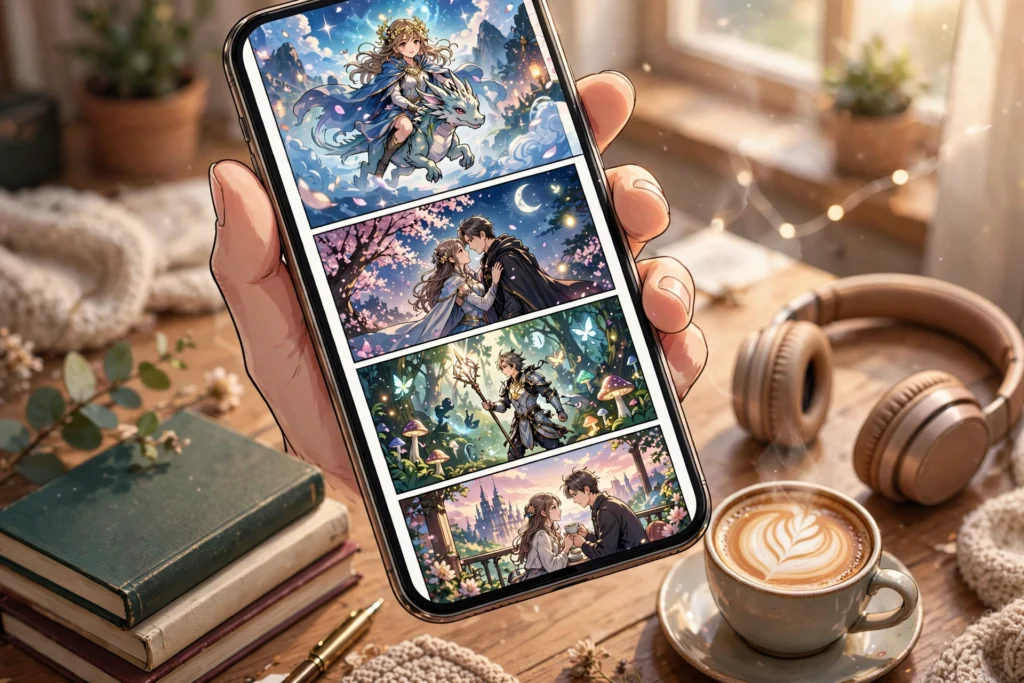
Manhwa follow Western-style left-to-right reading, since Korean is written horizontally. But the bigger difference is the format: modern manhwa are designed as vertical-scroll webtoons, so you read by scrolling down through one long, continuous strip of panels on your phone. This scrolling layout is one of the easiest ways to tell the two apart at a glance.
3. Color: Black and White vs Full Color
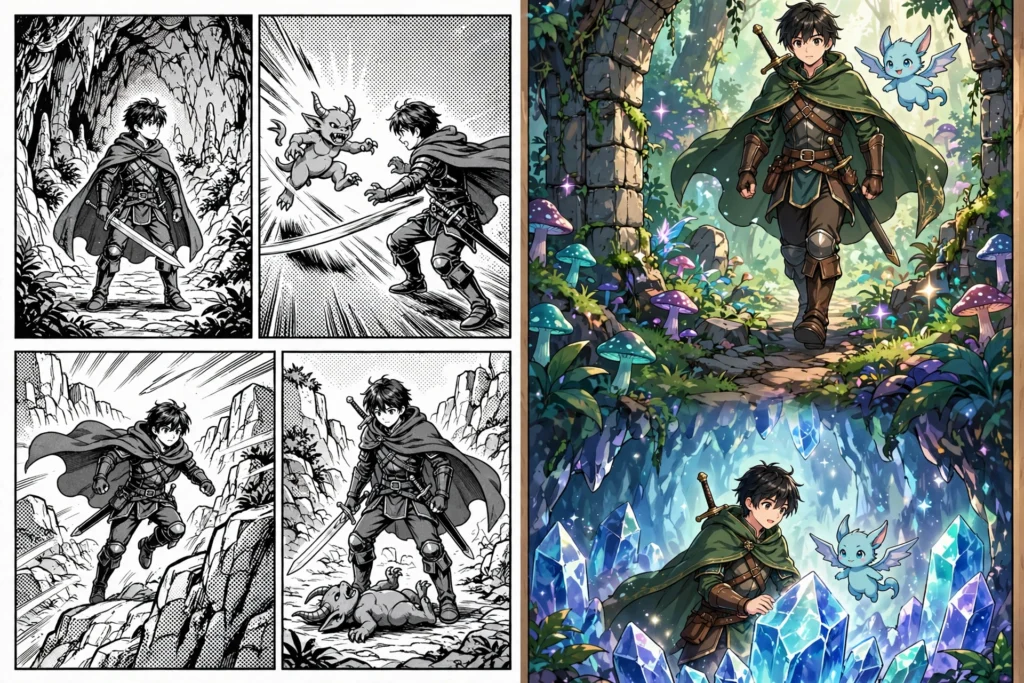
Manga are almost always black and white. This is a deliberate choice: monochrome art allows weekly serialization schedules to keep up and keeps printing costs low, and many fans feel it gives manga its distinctive look.
Manhwa published online are usually in full color. Because webtoons are digital-first, there are no printing costs to worry about, so artists can use vibrant, painterly color as a core part of the visual experience. This is why manhwa often look so striking on a phone screen.
4. Format: Print Magazines vs Digital Webtoons
The manga industry is print-first. Series serialize in thick weekly or monthly anthology magazines such as Weekly Shonen Jump, and popular series are later collected into tankobon volumes. Digital editions exist, but print remains the heart of the industry.
Manhwa are digital-first. The modern manhwa industry grew out of webtoon platforms in the early 2000s, with series published as episodes on apps and websites. Wikipedia notes that the term “webtoon” was coined in 2000 and that the global WEBTOON platform launched in 2014, helping Korean comics reach readers in dozens of countries.
5. Art Style and Storytelling
Manga art is famous for expressive, stylized character designs, dramatic screentones, and cinematic panel layouts refined over more than a century of print history.
Manhwa art tends toward more realistic proportions, detailed fashion, and painterly full-color backgrounds. The vertical-scroll format also changes the storytelling: artists use long vertical panels to control pacing, build suspense with slow scrolls, and deliver dramatic reveals that would be impossible on a printed page.
6. Adaptations: Anime vs K-Dramas
Successful manga are most often adapted into anime. Some of the biggest anime franchises in history started as manga serialized in Japanese magazines.
Successful manhwa are more often adapted into live-action K-dramas and films. True Beauty, A Business Proposal, and All of Us Are Dead all began as Korean webtoons before becoming hit screen adaptations. That said, the line is blurring: hit manhwa like Solo Leveling, Tower of God, and Noblesse have received anime adaptations too.
7. Genres and Release Pace
Manga are organized into demographic genres such as shonen (boys), shojo (girls), seinen (adult men), and josei (adult women), with thousands of series running across every imaginable niche.
Manhwa lean heavily into power fantasy, romance, and villainess isekai stories, and they release in seasons with breaks of several months between them, rather than the relentless weekly schedule of manga magazines.
Where to Read Manga and Manhwa Legally
For manga, official English sources include VIZ and MANGA Plus, which offer licensed chapters straight from Japan. For manhwa, WEBTOON, Tapas, Tappytoon, and Manta provide official English translations that support the original creators. Reading legally keeps the industry healthy and the stories coming. The Manga entry on Wikipedia is a solid starting point if you want to explore the history of Japanese comics in more depth.
What Is the Difference Between Manga and Manhwa: Frequently Asked Questions
What is the difference between manga and manhwa in simple terms?
Manga are Japanese comics, usually black and white and read right to left. Manhwa are Korean comics, usually full color and read as vertical scrolls on a screen.
Is Solo Leveling a manga or a manhwa?
Solo Leveling is a manhwa. It was created in South Korea by writer Chugong and artist Jang Sung-rak, and it follows the full-color vertical webtoon format.
Which is better, manga or manhwa?
Neither is objectively better. Manga offer deeper back catalogs and long-running epics, while manhwa offer full-color art and fast-paced stories designed for phones. Most readers enjoy both.
Are webtoons the same as manhwa?
Mostly, yes. Webtoon is the digital vertical-scroll format that modern manhwa are published in. All webtoons from Korea are manhwa, though the term webtoon is sometimes used for the format itself.
Do manga and manhwa have different art styles?
Generally, yes. Manga use black-and-white art with screentones and stylized designs, while manhwa use full-color, painterly art with more realistic proportions. There are exceptions in both.
Can a manhwa become an anime?
Yes. While manhwa are more commonly adapted into K-dramas, several popular manhwa including Solo Leveling, Tower of God, and Noblesse have received anime adaptations.
Conclusion
Now you know exactly what is the difference between manga and manhwa: origin, reading direction, color, format, art, adaptations, and genres. They are sibling art forms with their own strengths, and understanding both opens up twice as many great stories.
Ready to dive in? Check out our roundup of the best completed manhwa for ten finished Korean series you can binge from start to finish today.